Blog · Review
SlimTide pros and cons: what the label shows and what it leaves out
The SlimTide pros and cons come down to ease against evidence. Pros: one capsule a day, no stimulant listed, printed fiber amounts and a 60-day guarantee. Cons: fiber doses far below studied amounts, no CFU count or strain codes, and no published trial of the product. It is a supplement, not a drug.
Written by the Slimtidebalance editorial teamMedically reviewed by Dr. Dyan Hes, MD, PhysicianUpdated · 8 min read

In one view
What are the SlimTide pros and cons at a glance?
Here are the SlimTide pros and cons side by side. Each line comes from the bottle label, the order page or a public health source. Where we could not find a fact, we say it is not published.
Pros
- One capsule a day, nothing to mix
- No caffeine or other stimulant listed
- Milligram amounts printed for both fibers
- Three probiotic species named
- Vegetarian capsule shell (hypromellose)
- 60-day money-back guarantee on every pack
Cons
- Fiber doses far below the amounts trials used
- No CFU count and no strain codes
- Split of the 36 mg blend not shown
- Live or pasteurized Akkermansia not stated
- No published trial of SlimTide itself
- Guarantee wording differs across the sales site
That list is a start. The next sections explain why each point matters, in plain words.
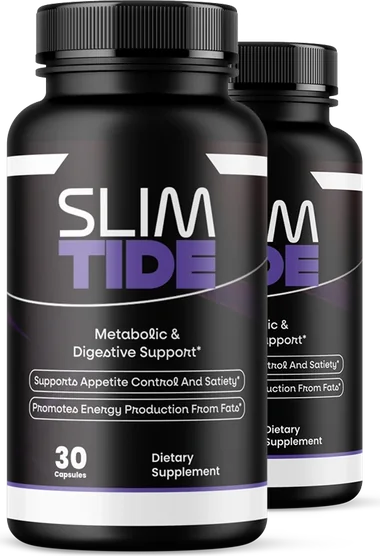
- One capsule daily with an 8 oz glass of water; 30 capsules per bottle.
- Per capsule: 211 mg chicory root inulin, 100 mg potato resistant starch, 36 mg probiotic blend.
- Pack prices: $79, $69 or $49 a bottle; 3 and 6 bottles ship free in the U.S.
- No CFU count, no strain codes and no published trial of the product.
- A 60-day money-back guarantee, worded differently in different parts of the sales site.
The good side
What are the real pros of this capsule?
The first pro is simplicity. The label direction is one capsule daily with an 8 oz glass of water. There is no powder to measure and no schedule around meals. A bottle holds 30 capsules, so one bottle covers 30 days.
The second is what is not on the panel. No caffeine or stimulant is listed. For people who dislike jitters, that removes one worry. It also means there is no energy kick to expect.
The third is honest numbers where they exist. Chicory root inulin is 211 mg and potato resistant starch is 100 mg. Many blends hide amounts inside one line. Here both fibers have their own line, and all three probiotic species are named: Bifidobacterium infantis, Clostridium butyricum and Akkermansia muciniphila.
The fourth is the money-back window. Every pack carries 60 days, and even the smallest pack lasts 60 days at one capsule a day. That lets you test it without committing to a big supply.
The weak side
What are the real cons of this capsule?
The biggest con is dose. Trials of inulin-type fiber used about 10 to 21 g a day, and a potato resistant starch trial used 30 g a day (Meta-analysis: chicory inulin and weight (2024), trade report) (Oligofructose trial (2009)) (Potato resistant starch trial (2018)). One capsule holds 211 mg and 100 mg. Put another way, the studied amounts are roughly 47 to 300 times larger.
The second con is the probiotic blend. The label gives a weight, 36 mg, not a count of live cells. NIH explains that a weight can include dead microbes and that a CFU count at the end of shelf life is what to look for (NIH ODS: probiotics). None is printed here. Strain codes are missing too, and NIH says probiotic effects are strain-specific.
The third is evidence. No trial of the SlimTide formula is published. The main Akkermansia study was a 3-month pilot with 32 completers using about 10 billion pasteurized cells a day. Insulin sensitivity improved, but the weight difference was not significant (Akkermansia pilot study (2019)). The label does not say whether its own Akkermansia is live or pasteurized.
The fourth is storage. The label asks you to refrigerate. A storage study found probiotic counts held better at 4°C than at 28°C (Probiotic storage and viability (2018)). The shelf life of an opened bottle is not published.
Who gains, who loses
Who gains and who loses?
| Buyer | What fits | What may disappoint |
|---|---|---|
| Wants a simple daily habit | One capsule, no mixing, no stimulant listed | Fridge storage once opened |
| Wants a high-fiber product | Printed fiber amounts are easy to read | About 0.3 g of fiber a day in total |
| Wants a known probiotic dose | Three species named | No CFU count, no strain codes |
| Wants fast or large weight change | A 60-day window to try it | No published results for the product itself |
| Takes medicine or has a condition | The label tells you to ask a physician | No interaction data published; ask a pharmacist |
That last row matters. The label asks pregnant or nursing mothers, anyone under 18 and anyone with a known medical condition to consult a physician first. NCCIH adds that probiotic risks are greater for people who are seriously ill or have a weakened immune system (NCCIH: probiotics safety).
Weigh it yourselfThe order page shows each pack's price, shipping and the 60-day guarantee, so you can weigh the cost for yourself.
See today's price and guaranteeWe earn money when you buy through our order links. The price is the same for you.
Price side
How does the pack you pick change the picture?
Price is both a pro and a con, depending on the pack. The 6-bottle pack has the lowest cost per day and free U.S. shipping. The 2-bottle pack costs the most per bottle and adds shipping at checkout, with the amount not published.
| Pack | Per bottle | Total | About per day | Shipping |
|---|---|---|---|---|
| 2 bottles | $79 | $158 | $2.63 | Added at checkout; amount not published |
| 3 bottles | $69 | $207 | $2.30 | Free U.S. shipping |
| 6 bottles | $49 | $294 | $1.63 | Free U.S. shipping |
A bigger pack is cheaper per bottle but ties up more money inside the guarantee window. If you are unsure, a shorter first order keeps more cash flexible. See our pricing page for the full math.
Compared with
How does it compare with a fiber powder or a prescription?
A spoonful of a fiber powder can hold several grams of fiber. One SlimTide capsule holds about a third of a gram. That is the trade: the capsule is easier to take, and the powder is closer to the dose studied. Powder also brings more gas risk if you add it too fast. NIDDK suggests raising fiber by 2 to 3 grams a day (NIDDK: IBS diet and fiber).
Prescription weight medicines are a different category. NIDDK says they are used with a lifestyle program, for adults with a BMI of 30 or more, or 27 or more with a related condition (NIDDK: prescription weight-loss medicines). A supplement is not a substitute. If you think you need medical weight care, ask your doctor. Our post on weight medicines vs supplements explains the gap.
A simple checklist
How should you weigh the SlimTide pros and cons for yourself?
Match it to your goal
If you want a simple habit and can accept small doses, it fits. If you want a studied dose, it does not.
Check your health first
Ask a doctor if you are pregnant, nursing, under 18, seriously ill, immunocompromised or on any medicine.
Plan the fridge
Decide where the bottle will live after opening, and how you will take it when you travel.
Set a test window
Log weight, waist, digestion and hunger weekly, and decide by week 6 to 8.
Keep the paper trail
Save the order email and call +1 (302) 200-3480 before day 60 if you want a refund.
Frequently asked questions
Frequently asked questions
What is the main pro of SlimTide?
Ease. It is one capsule a day with water, with no stimulant listed, and the label prints amounts for both fibers.
What is the main con of SlimTide?
Dose and evidence. The fibers are far below the amounts studied for weight, and no trial of the product is published.
Does SlimTide have a CFU count?
No. The label gives a 36 mg blend weight for three species, with no CFU count and no strain codes.
Does SlimTide need a fridge?
The label says to refrigerate for optimal quality, and the sales page says to do so after opening to protect the probiotics.
Is the 60-day guarantee a pro?
It is a pro, with a caveat. The sales site words it in several ways, so count from your purchase date and ask the order desk.
Is SlimTide approved by the FDA?
No. It is a dietary supplement, and the FDA approves no supplements. Ask your doctor if you take medicine or have a health condition.
Our view
Our view
On balance, the slimtide pros and cons describe a gentle, simple capsule with a dose problem. The ease is real. The evidence gap is real too. If you value a calm daily routine and a clear refund window, the pros may be enough. If you want a product tested at a studied dose, the cons will matter more.
Whatever you choose, food, movement and sleep do most of the work, and your doctor is the right person for medical questions. This page was medically reviewed by Dr. Dyan Hes, MD, Physician, and is information, not medical advice.
More: our SlimTide ingredients guide, the supplement facts page and the SlimTide home page.
Weigh it yourselfIf the pros outweigh the cons for you, the order page lists the packs and the guarantee clearly.
See today's price and guaranteeWe earn money when you buy through our order links. The price is the same for you.
Who wrote this
Written and reviewed by
The team reads the SlimTide label line by line, checks each number against public health sources and published trials, and writes it in plain English. We do not write for the manufacturer.
Last updated . Read our editorial standards and how we check reviews. This website is run by a USA authorized retailer, not by the manufacturer. We earn money when you buy through our order links.