Blog · Weight care
Prescription Weight Medicines vs Supplements: Where SlimTide Fits
Prescription weight medicines are reviewed and approved by the FDA, prescribed for adults with a BMI of 30 or more, or 27 or more with a weight-related condition, and add about 3% to 12% more loss at one year with a lifestyle program (NIDDK: prescription weight-loss medicines). Supplements like SlimTide need no FDA approval before sale (FDA: supplements Q&A) and are not weight-loss medicines.
Written by the Slimtidebalance editorial teamUpdated · 8 min read

The difference
What is the difference between a weight-loss medicine and a supplement?
A medicine must prove it works and is safe before the FDA lets it be sold. A dietary supplement does not. Under the law, FDA cannot approve supplements or their labels before they reach shelves (FDA: supplements Q&A).
That one fact shapes everything else. Medicines come with trial results, a prescriber and follow-up. Supplements come with a label written by the maker, and the maker is responsible for safety (FDA: supplements Q&A).
The gap shows in testing too. NCCIH says many weight-loss supplements have not been tested for safety, and lab tests sometimes find ingredients that differ from the label (NCCIH: weight control).
SlimTide is a dietary supplement. Its label claims carry an asterisk because the FDA has not evaluated them, and it is not a weight-loss medicine.
Side by side
How do prescription weight medicines and supplements compare?
They differ in review, access and evidence. The table sums up what public health sources say.
| Question | Prescription medicine | Supplement (such as SlimTide) |
|---|---|---|
| Reviewed by FDA before sale? | Yes, approved for weight management | No premarket review or approval |
| Who can get it? | Adults who meet BMI criteria, through a prescriber | Anyone who buys it; the label asks some groups to see a physician first |
| Typical result | About 3% to 12% more loss at 1 year than lifestyle alone | Probiotics: inconsistent; under 1 kg in reviews (Meta-analysis: probiotics and weight (2019)) |
| Used with lifestyle changes? | Yes, alongside a lifestyle program | Lifestyle remains the basis either way |
| Medical follow-up? | Yes, by the prescriber | None built in |
Eligibility
Who qualifies for prescription weight-loss medicines?
Adults with a BMI of 30 or more, or 27 or more with a weight-related condition, according to NIDDK (NIDDK: prescription weight-loss medicines). A doctor decides whether a medicine fits, based on your health as a whole.
BMI is a number worked out from your height and weight. It is a starting point, not a full picture, so the conversation with your doctor matters more than the number alone. A weight-related condition is a health problem linked to weight, and your doctor can tell you whether you have one.
We do not give medicine doses or tell anyone to start, stop or switch a medicine. Those choices belong to you and your prescriber.
Approved options
Which prescription medicines are approved for weight management?
NIDDK lists six options approved by the FDA for weight management. Used with a lifestyle program, they produce about 3% to 12% more loss of starting weight at one year than lifestyle changes alone (NIDDK: prescription weight-loss medicines).
Orlistat
One of the six listed by NIDDK.
Phentermine-topiramate
A combination medicine on the NIDDK list.
Naltrexone-bupropion
Another combination on the list.
Liraglutide
Listed by NIDDK.
Semaglutide
Listed by NIDDK.
Tirzepatide
Also on the NIDDK list.
Each has its own benefits, side effects and reasons not to use it. Only a prescriber who knows your history can weigh those. Our medicines and SlimTide page covers questions about taking a supplement alongside prescriptions.
Supplements
What can a supplement like SlimTide do, and what can it not do?
It can add a small amount of fiber and a probiotic blend to your day. It cannot stand in for a medicine, and no trial of SlimTide itself is published.
The dose is the main issue. Each capsule has 211 mg of chicory inulin; weight trials used a median of 10 g a day (Meta-analysis: chicory inulin and weight (2024), trade report). It has 100 mg of potato resistant starch; the potato trial used 30 g (Potato resistant starch trial, 30 g a day (2018)). NIH rates the effect of probiotics on weight as inconsistent (NIH ODS: weight-loss supplements).
Some products sold as weight supplements have been worse than weak. FDA has found hundreds that contained a withdrawn prescription drug, sibutramine (FDA: 6 tip-offs to rip-offs), and keeps a list of tainted products (FDA: tainted weight-loss products). Nothing in our sources ties SlimTide to that list.
See our guide to choosing a weight supplement for a full checklist.
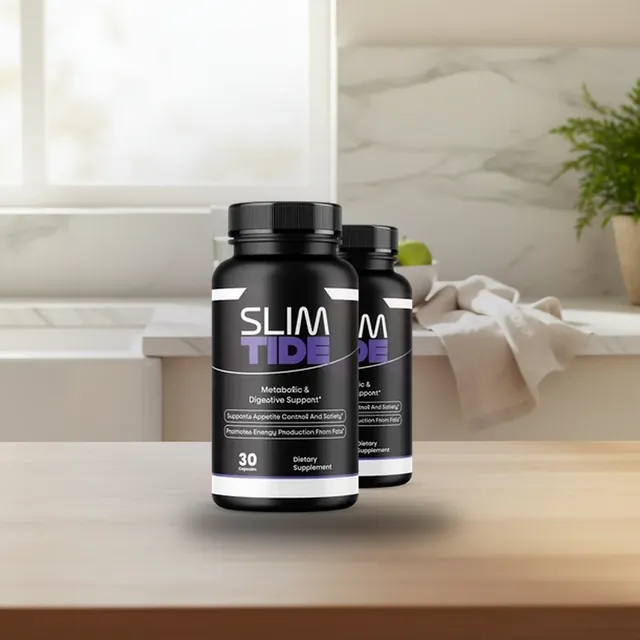
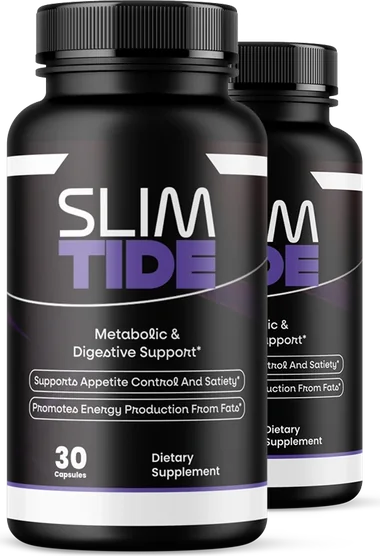
Try SlimTide for 60 days1 capsule a day · from $49 a bottle · free U.S. shipping on 3+ bottles
Order nowYour doctor
When should you talk to a doctor about weight?
Talk to a doctor if your BMI is 27 or higher with a health condition, 30 or higher, or if weight worries you at all. A visit is also the time to mention every supplement you take.
You may qualify for treatment
The BMI ranges above are where prescription options begin (NIDDK: prescription weight-loss medicines).
You take medicine or have a condition
The SlimTide label asks anyone with a known medical condition to consult a physician first. No drug interactions are listed in the sources we use.
You are pregnant, nursing or seriously ill
The label names pregnancy and nursing. NCCIH says probiotic risks are greater with severe illness or a weakened immune system (NCCIH: probiotics safety).
You want a plan that lasts
A doctor can help set goals, track progress and change course if something is not working.
Bring the bottle or our Supplement Facts transcript to the visit.
The basis
What matters most for weight, with or without medicine?
Eating, activity and sleep. NIH's supplement office calls diet, fewer calories and activity the basis of weight loss (NIH ODS: weight-loss supplements), and medicines are meant to be used with a lifestyle program (NIDDK: prescription weight-loss medicines).
Small goals count. The CDC says a 5% loss, 10 lb for a 200-lb person, can help blood pressure, cholesterol and blood sugar, and a pace of 1 to 2 pounds a week is more likely to last (CDC: steps for losing weight).
Be wary of anything that promises more. The FTC says claims of losing 2 lb or more a week for a month without diet or exercise are almost always false (FTC: Gut Check).
Bottom line
Where does SlimTide fit next to weight-loss medicines?
On a different shelf. Medicines are approved for weight management, prescribed by BMI and followed by a doctor. SlimTide is a low-dose fiber and probiotic capsule with brand claims the FDA has not evaluated. If weight is a health concern, start with a doctor.
FAQ
Weight medicines and supplements: common questions
Who qualifies for prescription weight-loss medication?
NIDDK says these medicines are for adults with a BMI of 30 or more, or 27 or more with a weight-related condition. A doctor decides whether one fits, based on your health history, other medicines and goals. They are meant to be used with a lifestyle program.
How much weight do prescription weight medicines help people lose?
Used with a lifestyle program, approved medicines produce about 3% to 12% more loss of starting weight at one year than lifestyle changes alone, according to NIDDK. Results vary by medicine and person, so your prescriber is the one to set expectations.
Is SlimTide a weight-loss medicine?
No. SlimTide is a dietary supplement, not a drug and not a weight-loss medicine. Its label claims carry an asterisk because the FDA has not evaluated them. Each capsule has 211 mg of chicory inulin, 100 mg of potato resistant starch and a 36 mg probiotic blend.
Does the FDA approve weight-loss supplements?
No. FDA does not have the authority to approve dietary supplements or their labels before they are sold. Makers are responsible for safety. FDA has also found weight-loss products sold as supplements that contained hidden prescription drug ingredients, and it keeps a public list of them.
Can I take SlimTide with a prescription weight medicine?
Ask your prescriber first. No drug interactions are listed in the sources we use, but the SlimTide label asks anyone with a known medical condition to consult a physician before use. Bring the bottle to your visit so the doctor can read the full label.
When should I see a doctor about my weight?
See a doctor if your BMI is 30 or more, 27 or more with a health condition, or if weight is affecting how you feel. Go before starting any supplement if you take medicine, are pregnant or nursing, or are seriously ill. Bring a list of everything you take.
Are supplements safer than prescription weight medicines?
Not necessarily. Natural does not mean safe, NCCIH says, and many weight-loss supplements have not been tested for safety. Medicines are reviewed before sale and come with a prescriber who monitors you. Each choice should be made with a doctor if weight affects your health.
Who wrote this
Written and reviewed by
A small team that reads the SlimTide label line by line, checks every number against public health sources (NIH ODS, NCCIH, CDC, NIDDK, FDA, FTC) and published trials, and rewrites it in plain English. We do not write for the manufacturer, and we update a page whenever the label, the prices or the evidence changes.
Last updated . Read our editorial standards and how we check reviews. This website is run by a USA authorized retailer, not by the manufacturer. We earn money when you buy through our order links.
Keep reading
More about SlimTide

Choosing a weight supplement
Five checks for any weight supplement label, the FDA and FTC warning signs, and an honest run of SlimTide through them.
Read more
Medicines and SlimTide
What is and is not known about SlimTide with prescription drugs, and the exact questions to bring to a pharmacist.
Read moreWho it's for
A plain checklist of who might reasonably try SlimTide, and who should talk to a doctor before the first capsule.
Read moreUSA authorized SlimTide retailer
Ready to try SlimTide?
Pick a pack. At one capsule a day, every pack lasts at least 60 days, the whole money-back window.
- Secure checkout
- 60-day money-back guarantee
- Ships from the U.S.