Ingredient profile
Bifidobacterium infantis in SlimTide: What the Label Tells You
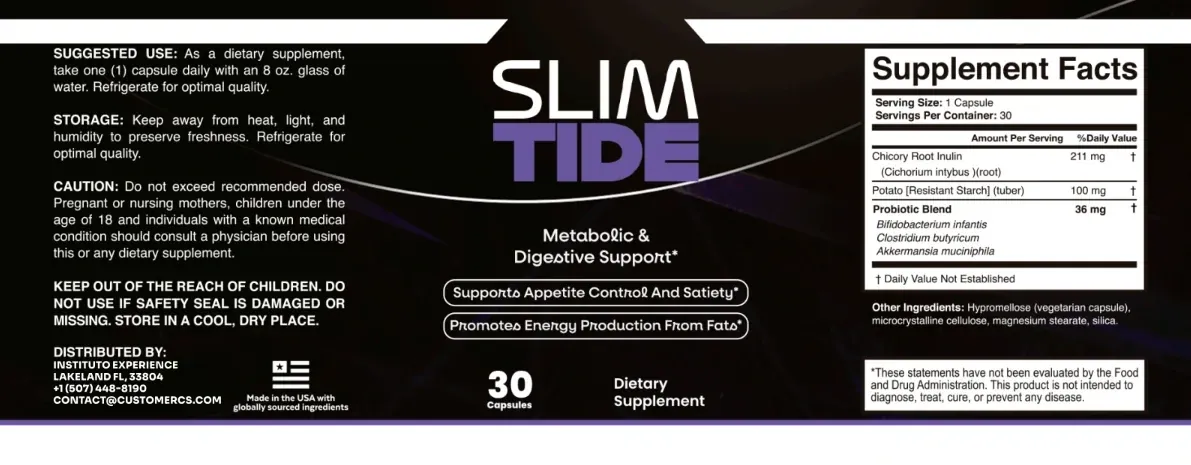
Bifidobacterium infantis is the first of three species in SlimTide's 36 mg Probiotic Blend. The label prints no strain code, no CFU count and no share of the blend. Our sources hold no weight trial of this species alone, and NIH rates probiotics as inconsistent for body weight (NIH ODS: weight-loss supplements). Effects depend on the exact strain (NIH ODS: probiotics).
Written by the Slimtidebalance editorial teamUpdated
The basics
What is Bifidobacterium infantis in SlimTide?
Bifidobacterium infantis is a probiotic bacterium, and it is the first name in the SlimTide Probiotic Blend. It shares one 36 mg line with Clostridium butyricum and Akkermansia muciniphila.
That blend is about a tenth of the 347 mg listed per capsule. The rest is fiber: 211 mg of chicory root inulin and 100 mg of potato resistant starch. The two fibers get their own amounts. B. infantis does not.
The facts below set the label next to the research.
| Label name | Bifidobacterium infantis (in the Probiotic Blend) |
|---|---|
| What it is | Bifidobacterium infantis, probiotic bacterium |
| Position on the label | Probiotic Blend, 1st name listed |
| Per 1-capsule serving | Part of a 36 mg blend; its share and CFU are not printed |
| Amount used in research | No weight trial of this species alone in our sources; mixed-probiotic reviews find under 1 kg |
| Strength of evidence | Not shown for weight |
| Main use studied | Common probiotic species; effects depend on the exact strain |
| Main caution | No strain code is printed, so you cannot match it to any study; probiotic risks are higher with severe illness or weak immunity. |
On the bottle
What does the SlimTide label say about B. infantis?
Very little beyond the name. The Supplement Facts panel lists "Probiotic Blend 36 mg" and then the three species, with B. infantis first. No Daily Value is set for it.
| Detail | On the label? | Why it matters |
|---|---|---|
| Species name | Yes: Bifidobacterium infantis | Tells you the kind of bacterium, not the exact strain |
| Strain code | Not published | Studies test strains; without a code you cannot match one (NIH ODS: probiotics) |
| Share of the 36 mg blend | Not published | The order of names does not tell you the amount |
| Live count (CFU) | Not published | A weight can include dead cells (NIH ODS: probiotics) |
| Storage advice | Yes: refrigerate for optimal quality | Probiotics can die during shelf life (NIH ODS: probiotics) |
You can read every line yourself on the SlimTide Supplement Facts page.
Strains
Why does a missing strain code matter for B. infantis?
Because probiotic effects belong to strains, not to whole species. The NIH probiotics fact sheet says effects are strain-specific (NIH ODS: probiotics). NCCIH adds that a benefit from one strain does not promise a benefit from another (NCCIH: probiotics safety).
A strain code is the letters and numbers that name one exact line of bacteria. Researchers report it so others can repeat the work. When a label leaves it out, a reader cannot link the product to any specific study.
An international probiotic panel (ISAPP) said the word "probiotic" should be used for products with well-defined strains and an adequate live count at the end of shelf life (ISAPP: probiotic consensus (2014)). The SlimTide label names the species but stops there.
The same gap applies to the other two names: see Akkermansia in SlimTide.
Evidence
Does Bifidobacterium infantis help with weight loss?
There is no direct evidence in our sources. We found no weight trial of B. infantis alone. What exists is research on probiotics as a group, which pools many products and strains.
| Source | Trials | Result |
|---|---|---|
| NIH ODS summary (NIH ODS: weight-loss supplements) | 15 trials, 957 people | About 0.6 kg more loss than placebo |
| NIH ODS summary (NIH ODS: weight-loss supplements) | 19 trials, 1,412 people | Waist 0.82 cm smaller; no change in weight or BMI |
| 2019 meta-analysis (Meta-analysis: probiotics and weight (2019)) | 25 trials for weight | 0.94 kg; weaker when Iranian trials were left out |
NIH calls the effect on body weight inconsistent (NIH ODS: weight-loss supplements). The 2019 authors called their findings minor but consistent (Meta-analysis: probiotics and weight (2019)). A news report quoted the lead author of the 15-trial review as not counting on probiotics to reduce body weight (Meta-analysis: probiotics, 0.6 kg (2018), news report).
These reviews do not single out B. infantis, so its role in weight is not shown.
How much
How many B. infantis cells are in one SlimTide capsule?
The label does not let you work it out. The count is not published, and neither is the weight of B. infantis alone. All we know is that three species share 36 mg.
A milligram figure is a weak guide anyway. NIH explains that labels must list the total weight of microorganisms, and that weight can include dead cells (NIH ODS: probiotics). Listing CFU, the count of live, growing units, is voluntary.
Share of the blend
B. infantis could be most of the 36 mg or a small part. The label does not say.
Live cells at expiry
NIH suggests checking the CFU expected at the end of shelf life (NIH ODS: probiotics). SlimTide prints none.
More on reading counts: probiotics, CFU and refrigeration in SlimTide.
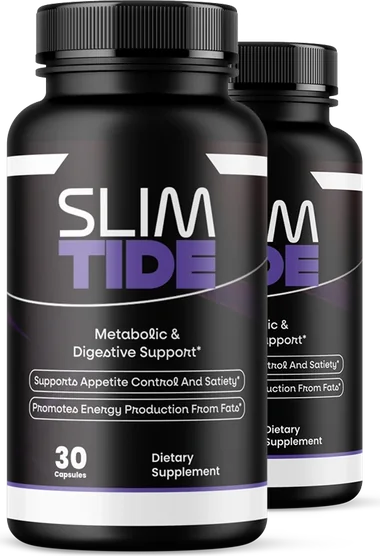
Try SlimTide for 60 days1 capsule a day · from $49 a bottle · free U.S. shipping on 3+ bottles
Order nowStorage
Does B. infantis need to be kept cold?
The label asks for the fridge, and that fits how probiotics behave. NIH notes they must be alive to work, can die during shelf life, and some need refrigeration (NIH ODS: probiotics). Once the bottle is open, keep it cold and closed.
Safety
Is Bifidobacterium infantis safe for adults?
For most healthy adults, our sources raise no specific alarm, and they hold no safety study of this species. NCCIH says the risk of harm from probiotics is greater in people with severe illness or a weakened immune system (NCCIH: probiotics safety).
The label asks pregnant or nursing mothers, anyone under 18 and anyone with a known medical condition to consult a physician before use. If you are seriously ill or immunocompromised, talk to your doctor before any probiotic.
SlimTide is not for babies. In 2023 FDA reported one death and more than two dozen other adverse events tied to probiotics given to hospitalized preterm infants (FDA: probiotics and preterm infants (2023)). Keep the bottle out of children's reach.
No drug interactions with B. infantis are listed in the sources we use. Bring the label to your doctor, and see SlimTide side effects.
Before you buy
What should you ask the seller about B. infantis?
Four questions turn a name on a label into something you can check.
Which strain is it?
Ask for the full strain code of the Bifidobacterium infantis used. Without it, no study can be matched to the product.
How much of the 36 mg is B. infantis?
Ask for its share of the blend, by weight or by count.
What is the CFU at the end of shelf life?
NIH points to this number, not the count at manufacture (NIH ODS: probiotics).
How long does it last out of the fridge?
The answer is not published. Ask how the count holds up during shipping and on a counter.
Call the order desk at +1 (302) 200-3480 or email [email protected]. If the answers are vague, that tells you something too.
Our take
Is B. infantis a good reason to buy SlimTide?
On its own, no. The species is named, which is more than some products print. But the missing strain, share and count leave nothing to measure, and no weight trial of it alone appears in our sources.
In its favor
- Named on the label, first in the blend
- Refrigeration advice suits live bacteria
- Part of a once-a-day capsule with no stimulant listed
Against it
- No strain code, so no study can be matched
- No CFU and no share of the 36 mg
- No weight trial of this species alone in our sources
Compare all five ingredients on the SlimTide ingredients overview.
FAQ
Bifidobacterium infantis in SlimTide: FAQ
How much Bifidobacterium infantis is in SlimTide?
The amount is not published. The label lists a 36 mg Probiotic Blend shared by B. infantis, Clostridium butyricum and Akkermansia muciniphila, with no split between them and no CFU count. Ask the order desk for the share and the live count at the end of shelf life.
What strain of B. infantis does SlimTide use?
The label does not say. It prints the species name only, with no strain code. Because probiotic effects are strain-specific, according to NIH, you cannot match SlimTide's B. infantis to any particular study without that code.
Does B. infantis cause weight loss?
Our sources contain no weight trial of B. infantis alone. Probiotics as a group showed under 1 kg of extra loss in reviews, and NIH rates their effect on body weight as inconsistent. SlimTide is a dietary supplement, not a weight-loss medicine.
Can B. infantis cause side effects?
Our sources hold no side-effect data for this species alone. NCCIH says probiotic risks are greater in people with severe illness or a weakened immune system. Stop taking SlimTide and call a doctor if you react badly.
Is the B. infantis in SlimTide alive?
The label does not say how many cells are alive. It gives a weight, and NIH notes a weight can include dead cells. Keeping the opened bottle in the fridge, as the label asks, is the step most likely to help live bacteria last.
Can children take SlimTide for the B. infantis?
No. This site covers adults only, and the label asks anyone under 18 to see a physician first. FDA has warned about serious harm when probiotics were given to hospitalized preterm infants, so keep the bottle away from babies and children.
Who wrote this
Written and reviewed by
A small team that reads the SlimTide label line by line, checks every number against public health sources (NIH ODS, NCCIH, CDC, NIDDK, FDA, FTC) and published trials, and rewrites it in plain English. We do not write for the manufacturer, and we update a page whenever the label, the prices or the evidence changes.
Last updated . Read our editorial standards and how we check reviews. This website is run by a USA authorized retailer, not by the manufacturer. We earn money when you buy through our order links.
Keep reading
More about SlimTide
Probiotics and CFU
Three species, one 36 mg line, no CFU: how to read SlimTide's probiotics and keep them cold.
Read more
Clostridium butyricum
The second probiotic in the blend: what is printed, what is missing and what to ask before you buy.
Read moreAkkermansia muciniphila
What one small pilot says about Akkermansia, and what the SlimTide label leaves out: count, form and share of the blend.
Read moreUSA authorized SlimTide retailer
Ready to try SlimTide?
Pick a pack. At one capsule a day, every pack lasts at least 60 days, the whole money-back window.
- Secure checkout
- 60-day money-back guarantee
- Ships from the U.S.